
Turtle eggs usually won’t hatch because they’re on the wrong block, too far from the player, not getting enough nighttime, or being trampled by mobs or players.
To hatch turtle eggs, place them on sand or red sand, stay nearby so the area stays loaded, let nights pass without always sleeping, and protect the eggs from trampling.
Quick Checklist
- Use the right block: Turtle eggs only hatch on sand or red sand.
- Stay close: Keep within 128 blocks so the eggs continue updating.
- Don’t skip nights: Eggs hatch fastest at night, so avoid sleeping every time.
- Protect them: Fence off the eggs to prevent trampling.
Why Turtle Eggs Aren’t Hatching
Turtle eggs hatch only when Minecraft keeps updating the area around them. That means the eggs need the right block, a loaded area, and random tick updates.
They also hatch much faster at night. If you sleep as soon as night starts, you skip the best time for eggs to crack.
| Problem | Likely Cause | Fix |
|---|---|---|
| Eggs never crack | Area is unloaded | Stay near the eggs |
| Eggs are very slow | Sleeping too often | Let nights pass |
| Eggs disappear | Something trampled them | Fence and light the area |
| Eggs broke when moved | No Silk Touch | Use a Silk Touch tool |
| Eggs reset after moving | Crack progress reset | Wait again after replacing |
| Farm stopped working | Random tick speed changed | Reset random tick speed |
| Turtles won’t lay eggs | Not at home beach | Follow the turtle home |
What Turtle Eggs Need to Hatch
Turtle eggs need a few basic conditions before they can hatch:
- Sand or red sand: Eggs only hatch on these blocks.
- A loaded area: Stay within 128 blocks horizontally so the eggs keep updating.
- Random tick updates: Random tick speed cannot be set to 0.
- Several nights: Turtle eggs hatch fastest at night.
- Protection: Keep mobs, players, and other entities from trampling them.
Nearby water is helpful after the eggs hatch because baby turtles try to reach it, but water is not required for the eggs to hatch.
If your turtles bred but still won’t lay eggs, remember that turtles only lay eggs at their home beach. Like other Minecraft breeding problems, the issue usually comes down to location, space, or missing conditions.
5 Fixes for Turtle Eggs That Won’t Hatch
If your turtle eggs aren’t hatching, one of the basic hatching conditions is probably missing. Work through these fixes in order.
Put Turtle Eggs on Sand or Red Sand
Turtle eggs can be placed on many blocks, but they only hatch on valid sand-type blocks.
Use:
- Sand
- Red sand
Avoid placing hatching eggs on:
- Dirt
- Stone
- Grass blocks
- Wood
- Slabs
- Artificial floors

If your eggs are on the wrong block, move them with a Silk Touch tool. Breaking turtle eggs without Silk Touch destroys them.
⚠️ Watch out: If an egg has already started cracking, moving it can reset its hatch progress.
Stay Close Enough for the Eggs to Update
Turtle eggs do not hatch while the area is unloaded.
Stay within 128 blocks horizontally of the eggs. If you travel far away, go to another dimension, or leave the area unloaded, the eggs stop progressing.
A good setup is a small beach hut or AFK spot near the eggs.
💡Quick tip: Build a safe shelter close to the eggs so you can wait overnight without zombies, drowned, or skeletons attacking you.
Let Nights Pass Without Sleeping
Turtle eggs hatch fastest at night.
They can progress during the day, but the best hatching progress happens late at night. If you sleep as soon as night starts, you skip the most useful part of the hatching cycle.
You don’t have to stay awake forever, but if your eggs aren’t hatching, let several full nights pass near them.
Protect the Eggs From Mobs and Players
Turtle eggs are fragile: players, mobs, and other living entities can break them by stepping, standing, or falling on them.
Zombies and zombie variants are the biggest threat because they intentionally try to trample turtle eggs when mob griefing is enabled.
Mobs that can target or threaten eggs include:
- Zombies
- Husks
- Drowned
- Zombie villagers
- Zombified piglins
Other mobs can still break eggs by accident if they walk or fall onto them. Minecraft mobs often follow weirdly specific rules, from zombies targeting turtle eggs to creepers being scared of cats.
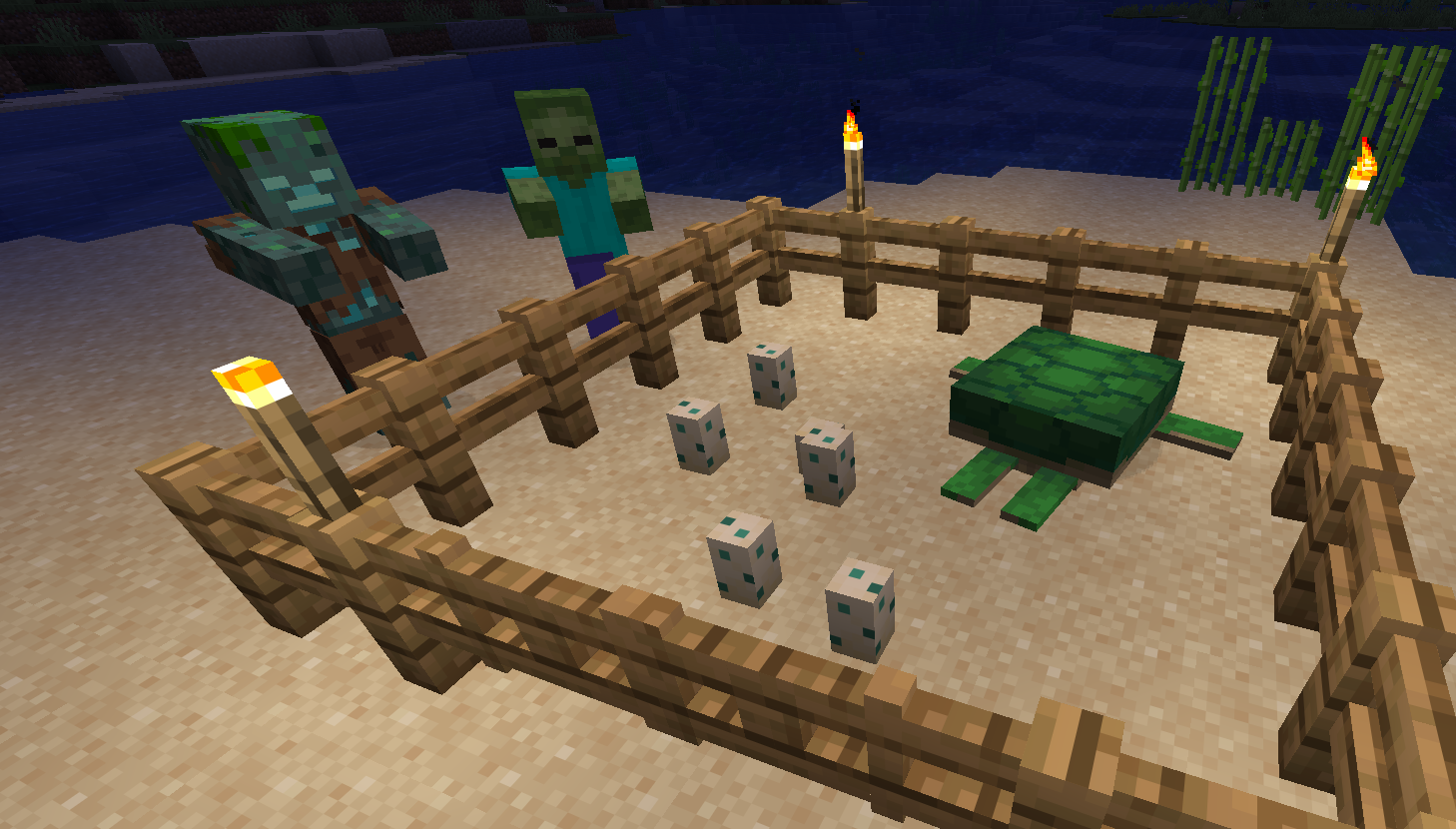
To protect the eggs, place them on sand or red sand and surround them with fences, walls, or glass. Add torches nearby, leave enough space so you don’t step on the eggs, and use a gate or trapdoor if you need safe access while waiting nearby overnight.
Check Random Tick Speed
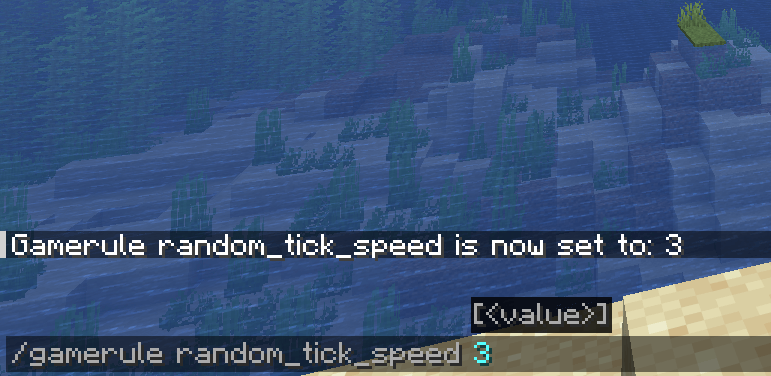
Turtle eggs hatch through random tick updates. If random tick speed is set too low or turned off, eggs may hatch very slowly or stop progressing.
Default random tick speed:
- Java Edition: 3
- Bedrock Edition: 1
To reset it in Java Edition, use:
/gamerule randomTickSpeed 3
To reset it in Bedrock Edition, use:
/gamerule randomTickSpeed 1
⚠️ Warning: Raising random tick speed affects more than turtle eggs. It can speed up crop growth, leaf decay, fire spread, and other random block updates. Use the default value for normal survival gameplay.
How Long Do Turtle Eggs Take to Hatch?
Turtle eggs usually take 4–5 Minecraft nights to hatch. Some hatch sooner, and some take longer. Most hatch within about 7 nights if the area stays loaded and you let the night pass.
| Situation | What to Expect |
|---|---|
| Normal survival setup | Usually 4–5 nights |
| Several full nights pass | Best natural progress |
| Player travels away | No progress |
| Player sleeps every night | Much slower |
| Random tick speed is 0 | No random tick progress |
Do not panic if nothing happens after one night. Turtle eggs crack in stages, so you may need to wait through several nights.
Turtle Egg Stages in Minecraft
Turtle eggs have three crack stages before they hatch:
- Uncracked
- Slightly cracked
- Very cracked
After the final crack stage, the eggs hatch into baby turtles.

If several eggs are stacked in one block, they hatch at the same time.
Can You Make Turtle Eggs Hatch Faster?
You can make turtle eggs hatch faster naturally by giving them the best conditions:
- Keep the eggs loaded by staying nearby.
- Let nights pass instead of sleeping.
- Protect the eggs from trampling.
- Use sand or red sand.
- Keep random tick speed at the correct default value.
There’s no regular Survival item that instantly hatches turtle eggs, and bone meal won’t work on them.
Commands can make eggs progress faster by increasing random tick speed, but they also affect other things in the world, so use them carefully.
Frequently Asked Questions
Will turtle eggs hatch if you sleep?
Turtle eggs can still hatch if you sleep, but sleeping skips the nighttime period when they progress fastest. For faster hatching, stay near the eggs and let nights pass.
Do turtle eggs need water nearby?
No. Turtle eggs do not need water nearby to hatch, but baby turtles will try to reach water after they hatch.
Can turtle eggs hatch underground?
Yes, as long as they are placed on sand or red sand and the chunk stays loaded. They do not need sunlight, but they still progress fastest at night.
Can turtle eggs hatch during the day?
Yes. Turtle eggs can progress during the day, but they crack and hatch much faster at night.
Can you move turtle eggs?
Yes, but only with a Silk Touch tool. Moving turtle eggs resets their crack progress, so place them carefully before waiting.
Why did my turtle eggs disappear?
They were probably trampled by a mob, player, or falling entity. Zombies, drowned, and other zombie variants often target turtle eggs, so protect them with fences, walls, and lighting.
Why won’t my turtles lay eggs in Minecraft?
Turtles only lay eggs at their home beach. After breeding two turtles with seagrass, follow the pregnant turtle back to its home sand so it can dig and place eggs.
If you’re building a turtle farm, it helps to understand how the beach biome works compared with other Minecraft biomes.